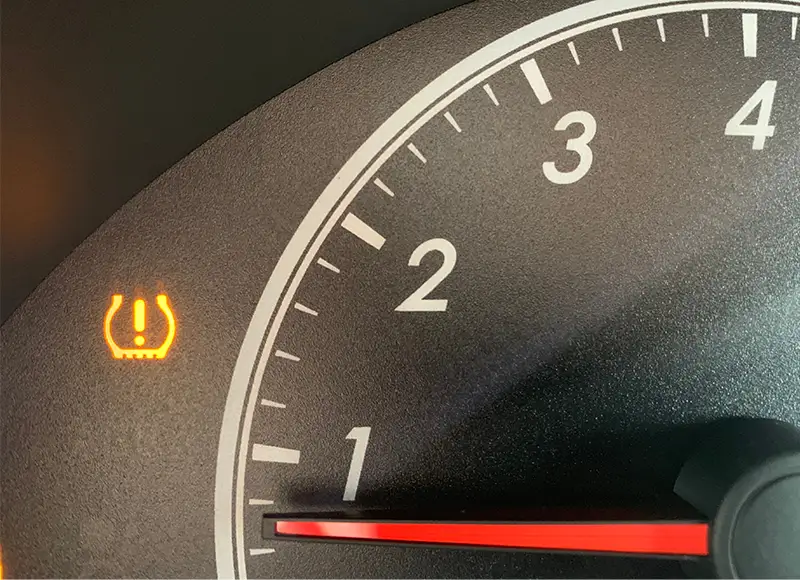





The first chilly morning of the season can bring an unexpected tire pressure warning to your Chevrolet or Buick. As the air inside a tire cools, its pressure drops. A tire that was close to the recommended pressure on a warm afternoon may be low enough to trigger a warning the next morning. Cold weather may explain the timing, but the warning still deserves a pressure check. A tire can also lose air because of a puncture or another leak. How should you check tire pressure? Use a tire gauge to check each tire before driving, or after the vehicle has been parked for at least three hours. Compare the readings with the recommended cold tire pressures on the label inside the driver’s door or in the owner’s manual. The number molded into the tire’s sidewall is its maximum pressure, not the vehicle’s recommended setting. Add air as needed, then check the tires again over the next several days. Tire pressure rises as the tires warm up during a drive, so avoid releasing air from a warm tire simply because its reading is higher than it was that morning. Make a habit of checking pressure monthly, including during seasonal temperature changes. When does the warning call for an inspection? If one tire keeps losing pressure after you fill it, have it inspected. A technician can look for a puncture, damage, or a leak around the valve or wheel. If the pressures are correct but the warning persists, the tire pressure monitoring system may need to be checked. The warning alone cannot tell you which of these is the cause. If a tire looks flat or damaged, address it before driving. Otherwise, note which tire is affected and whether the warning returns after you add air. Those details can help the service team investigate. For Chevrolet Buick tire service in Rittman, Laria Chevrolet Buick can check your tire pressures and inspect a tire that continues to lose air. That gives you an answer before a cold-morning warning becomes a recurring part of your drive.